Home / Loss-In-Weight Feeders / vibrating-loss-in-weight-feeder-80l-bin
TG-LW-SV100 / SV130 / SV160
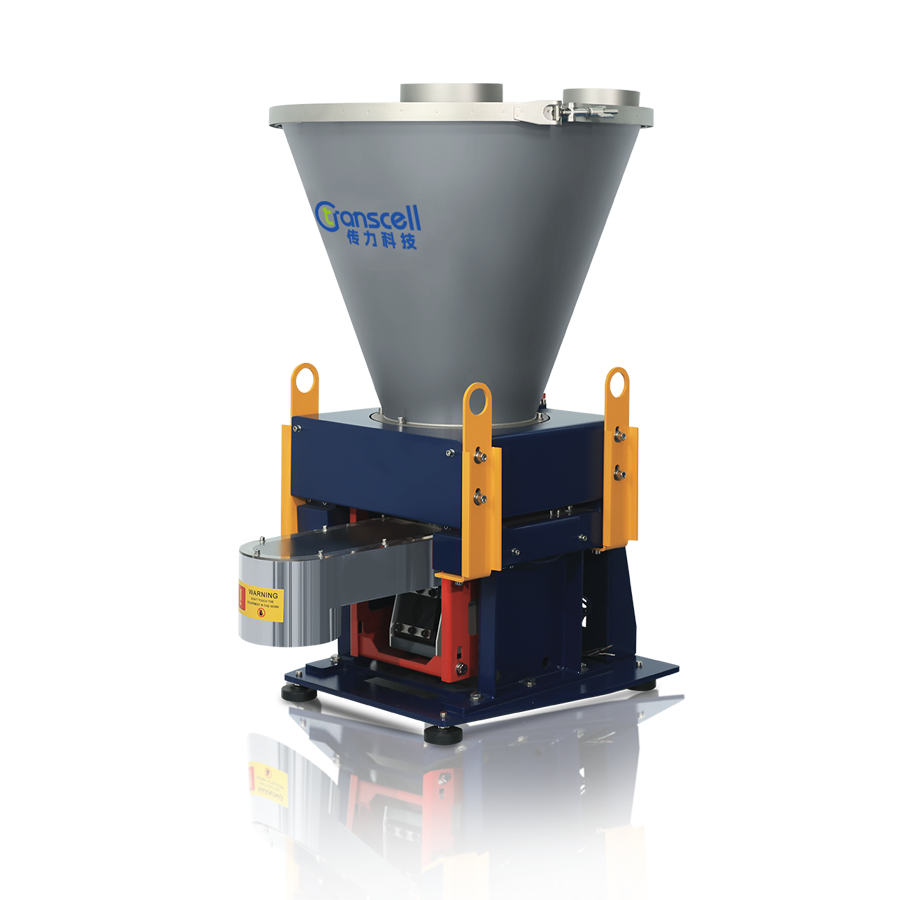
80L Metering Bin Vibrating Loss-In-Weight Feeder With 102mm Discharge Chute
Vibrating loss-in-weight metering in an 80 L bin configuration with a Φ102 mm discharge chute, SS304 contact parts, two FSSB-100 kg sensors and the HD-ZL150 linear vibrator.
Product Summary
The TG-LW-SV is a vibrating loss-in-weight feeder. Bulk solid is held in a metering bin, released through a vibrating discharge chute and weighed continuously, so the feed rate is controlled against the mass that actually leaves the bin rather than against a fixed volume.
This page describes the 80 L metering bin configuration with the Φ102 mm vibrating discharge chute. Two FSSB-100 kg high-precision sensors carry the metering bin and an HD-ZL150 linear vibrator drives the discharge chute. All parts in contact with the material are SS304; the hopper support is Q235-A. The same unit handles continuous loss-in-weight metering and intermittent loss-in-weight batch metering, so one feeder can serve both a continuous extrusion duty and a batch batching duty on the same plant.
Key Features
Gravimetric Control
Two FSSB-100 kg sensors weigh the metering bin, so feed rate follows actual mass loss instead of a volumetric assumption.
Built For Difficult Solids
The HD-ZL150 linear vibrator drives the Φ102 mm chute; the range is used for glass fibre, carbon fibre, crushed material and highly abrasive materials.
SS304 Contact Surfaces
Metering bin, chute and every material-contact part are SS304, with a Q235-A hopper support frame.
80 L Bin And 5 L Hopper
An 80 L metering bin sets the working inventory; a 5 L collecting hopper sits below it and the discharge chute regulating port is Φ168 mm.
Continuous Or Batch
Continuous loss-in-weight metering and intermittent loss-in-weight batch metering are both supported by the same feeder.
Options On Request
Optional electrical explosion-proof function, plus a cloud management platform for remote monitoring of feed rate, weight data, status and alarms.
Technical Specifications
| Parameter | Value |
|---|
| Model series | TG-LW-SV100 / TG-LW-SV130 / TG-LW-SV160 |
| Metering bin | 80 L (120 L option available) |
| Collecting hopper | 5 L |
| Hopper support | Q235-A |
| Discharge chute regulating port | Φ168 mm |
| High precision sensor | FSSB-100 kg x 2 |
| Linear vibrator | HD-ZL150 |
| Vibrating discharge chute | Φ102 mm (Φ159 mm option available) |
| Material-contact parts | SS304 |
| Environment temperature | 0-40 °C |
| Material temperature | 0-50 °C |
| Paint colour | RAL 5003 |
The values above are standard parameters. Additional loss-in-weight feeder configurations can be specified according to the material characteristics and process requirements.
Models and Options
Three frame sizes are offered: TG-LW-SV100, TG-LW-SV130 and TG-LW-SV160. The metering bin is listed in 80 L and 120 L, and the vibrating discharge chute in Φ102 mm and Φ159 mm; this page covers the 80 L bin with the Φ102 mm chute. Optional electrical explosion-proof function is available, and the standard paint colour is RAL 5003.
Materials and Structure
Material-contact parts are SS304 throughout. The hopper support is fabricated from Q235-A and finished in RAL 5003. The metering bin rests on two FSSB-100 kg sensors; the HD-ZL150 linear vibrator acts on the Φ102 mm vibrating discharge chute, and the regulating port above it is Φ168 mm. A 5 L collecting hopper completes the discharge path.
Applications
Compounding plastics, chemicals, building materials, food, new energy and medical production. Typical duties are automatic food batching, metering of colour masterbatch and modified-plastics ingredients, continuous feeding in extrusion, and ratio control and continuous conveying in chemical and building-material processes.
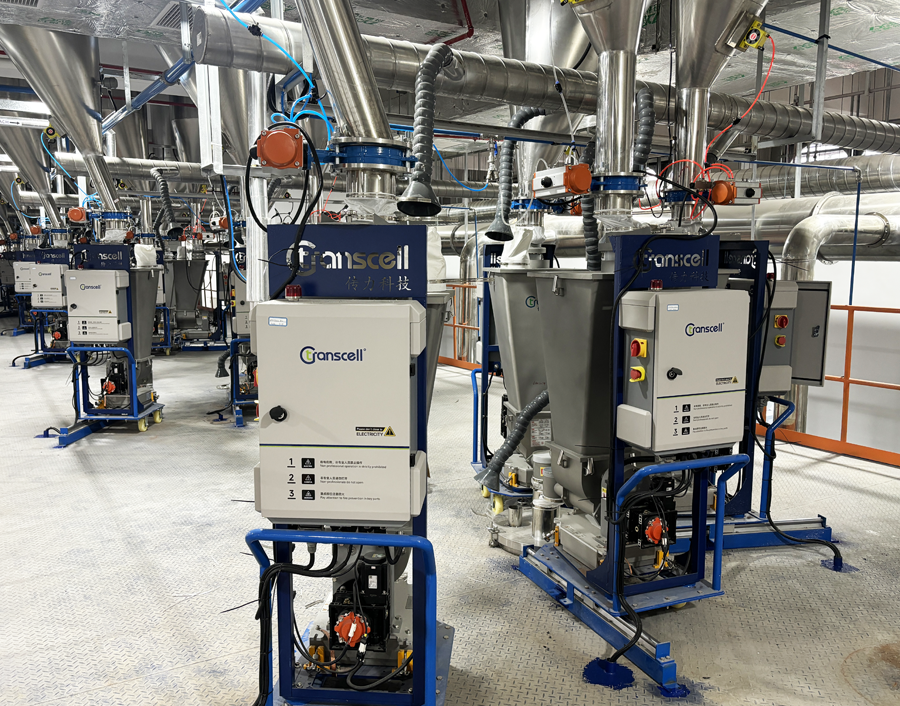
Application layout for continuous and batch metering duties
Customization
The parameters on this page are standard values. Further configurations are specified according to material characteristics and process requirements, including the optional electrical explosion-proof function. Other special requirements are handled through customised design, and a cloud management platform can be matched to the feeder for centralised operation and maintenance management.
Case Study
A programme of 200 units for compounding plastics, food and chemical producers on the global market ran for one year. The duties covered automatic food batching, colour-masterbatch and modified-plastics metering, continuous feeding in extrusion, and ratio control in chemical and building-material processes. The reported result was automated batching, more stable formula control and improved production efficiency.
FAQ
How is the feed rate controlled?
The metering bin is carried on two FSSB-100 kg high-precision sensors and weighed continuously, so the controller works from the mass leaving the bin over time rather than from a volumetric setting.
Can it handle glass fibre or abrasive regrind?
Yes. The HD-ZL150 linear vibrator drives the discharge chute, and the range is used with glass fibre, carbon fibre, crushed material and highly abrasive materials.
Does one unit run continuous and batch duty?
Yes. Both continuous loss-in-weight metering and intermittent loss-in-weight batch metering are supported.
Should I take the 80 L or the 120 L metering bin?
Both are listed. The larger bin gives a longer working inventory between refills; the final choice is fixed against the material characteristics and the process requirements of your line.
What ambient and material temperatures are allowed?
Standard environment temperature is 0-40 °C and material temperature 0-50 °C.
Which certifications apply?
The factory holds ISO 9001 certificate 38524UQN0DP2R0S and ISO 14001 certificate 38524UE640TRR0S for the design, manufacturing and sales of loss-in-weight feeders. A CE Verification of Conformity (ICR/VC/HFG260828) is held for the solid loss-in-weight feeder range; confirm the applicable model scope with us for your selected configuration.
Is explosion-proof equipment available?
An optional electrical explosion-proof function is available. Scope for your area classification is confirmed at the technical review stage.
Inquiry Information
Send your material, target feed range and site conditions for a configuration review. Transcell Intelligent Machinery (Changzhou) Co., Ltd., Building 9, No.9 Caoxi Road, Niutang Town, Wujin District, Changzhou City, Jiangsu Province, China.
E-mail: info@transcellgroup.com · Tel: +86 400-068-3777 · WhatsApp: +852 6952 8737 · Website: www.transcellgroup.com
Image Filename and Alt Suggestions
vibrating-loss-in-weight-feeder-tg-lw-sv100-80l-bin-front.png — Alt: Vibrating loss-in-weight feeder with 80 L metering bin, front view
vibrating-loss-in-weight-feeder-tg-lw-sv100-phi102-chute.png — Alt: Φ102 mm vibrating discharge chute and HD-ZL150 linear vibrator
vibrating-loss-in-weight-feeder-tg-lw-sv100-sensor-mount.png — Alt: FSSB-100 kg sensors mounted under the metering bin
vibrating-loss-in-weight-feeder-tg-lw-sv100-extrusion-line.png — Alt: Feeder installed on a continuous compounding extrusion line
 ✓ Verified Elite Supplier